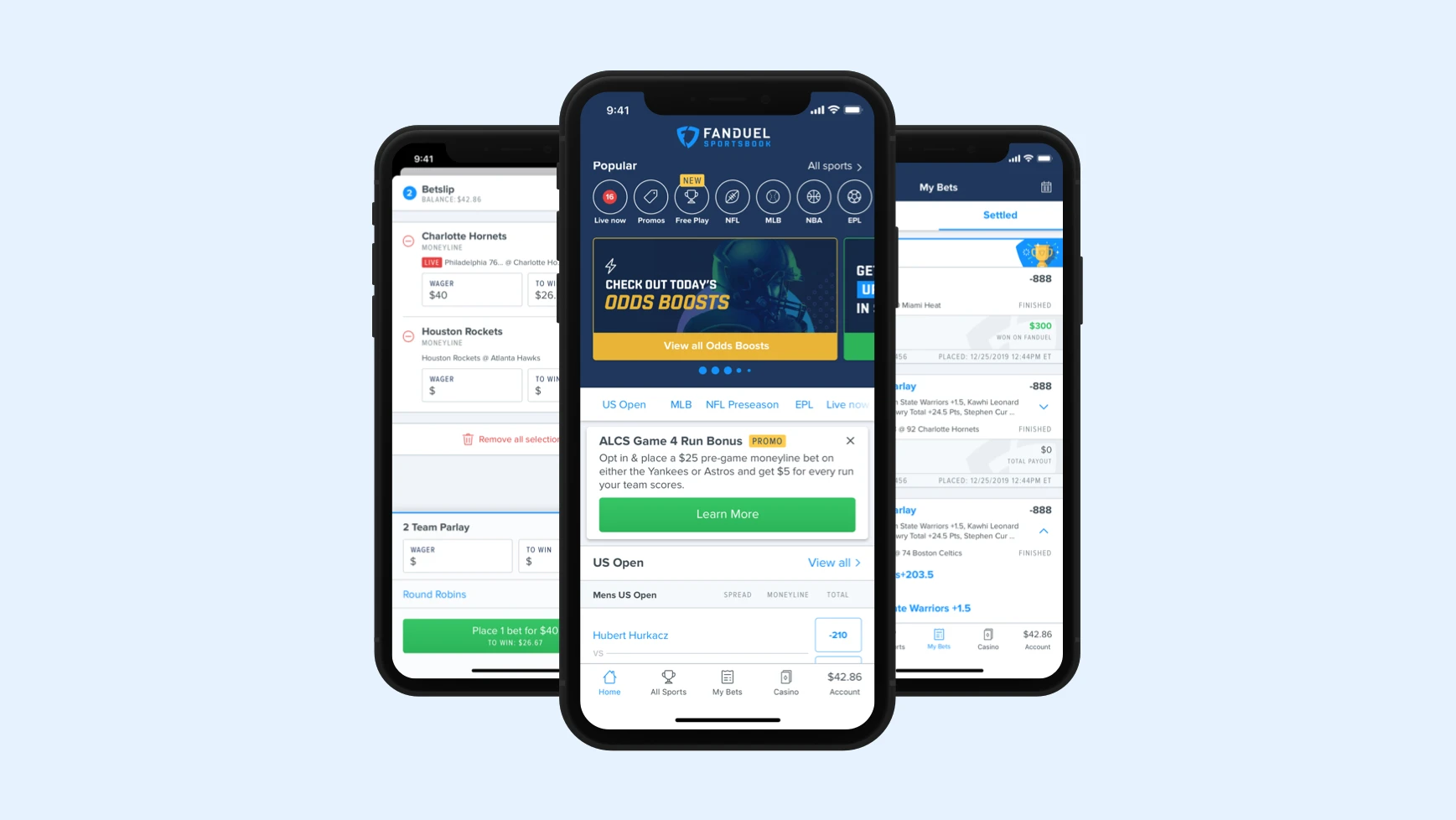
Design manager for FanDuel Sportsbook. I led a team of seven across design, research, and content through NxtGen, the rebuild from an outsourced white-label to an in-house, US-first native app, and its scale from 4 to 20+ states.
~42%
US market share, the clear #1
12m+
Registered users
4.6 → 4.9
App Store rating through the rebuild
Role Senior Designer → Design Manager
Team 7 across design, research & content
Platforms Native · Web · Retail
Validation Moderated testing · Maze · A/B
01
Context
When US states began legalising sports betting in 2018, FanDuel entered with a white-labelled third-party app skinned to match its fantasy platform. Despite the late entry, New Jersey was a runaway success, and the momentum carried into West Virginia and Pennsylvania, establishing FanDuel as the early market leader.
Early success, built on borrowed foundations.
02
The problem
1
Designed for Europe
Built for European markets, so its structure and conventions didn't resonate with US sports or customers.
2
An Apple deadline
Apple required all gaming apps to move to fully native codebases within 18 months.
3
Outsourced development
An external vendor controlled the codebase, limiting our ability to ship and develop features.
Facing the 18-month deadline and mounting technical constraints, we committed to NxtGen: a React Native sportsbook, built in-house, bespoke for the US market.
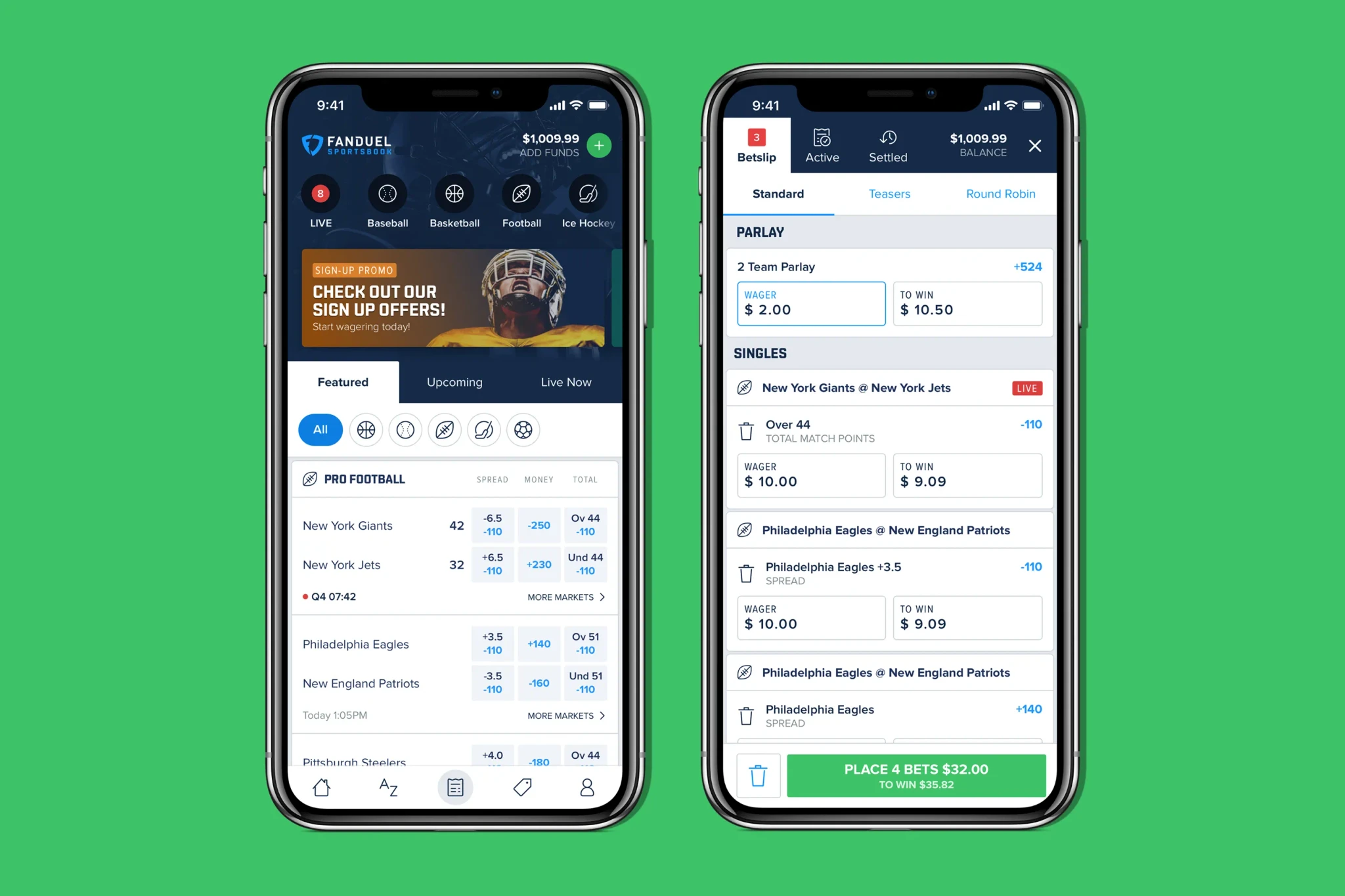
Fig. 02 · Before: the FanDuel-branded third-party app
03
Approach
Legacy analytics, user research, and technical feasibility set a prioritised roadmap fast. Rather than a wholesale redesign, we focused on the high-impact areas of navigation, market discovery, and betslip flows, validating each change with users before broader rollout.
3.1 · Made for the USA
We restructured the information architecture around North American sports (NFL, NBA, MLB, NHL) and their priority markets, through rapid workshops and low-fidelity prototypes. Moderated sessions and Maze tests validated the approach early, minimising rework and ensuring navigation met US expectations.
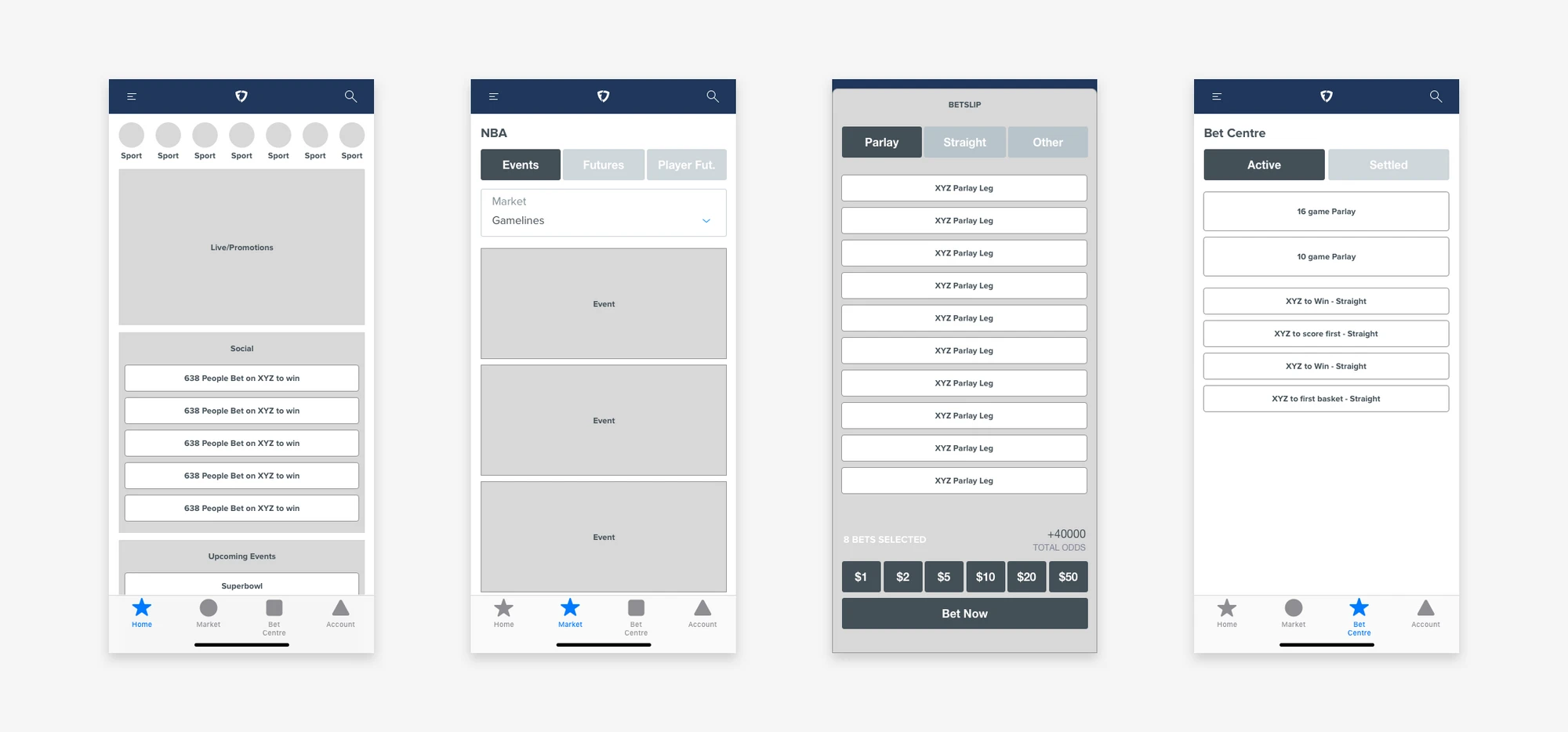
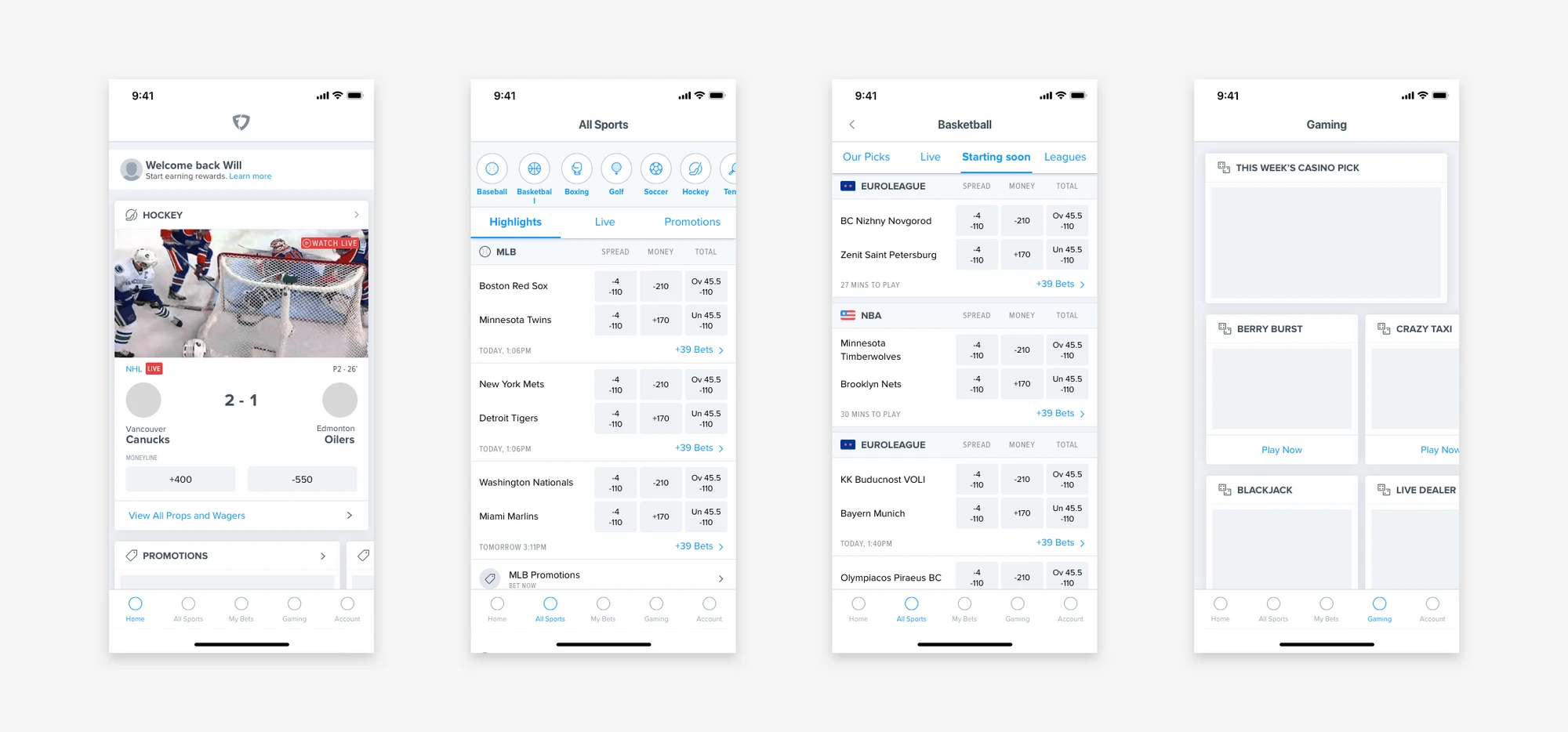
Fig. 03 · Early low-fidelity mocks
3.2 · From low to high fidelity
Wireframes progressed to high-fidelity screens with gamelines and coupons, extending Formation, FanDuel's design system, with sportsbook-specific components. Continuous validation through prototype testing, A/B experiments, and engineering syncs kept designs user-friendly, technically feasible, and accessible across platforms.
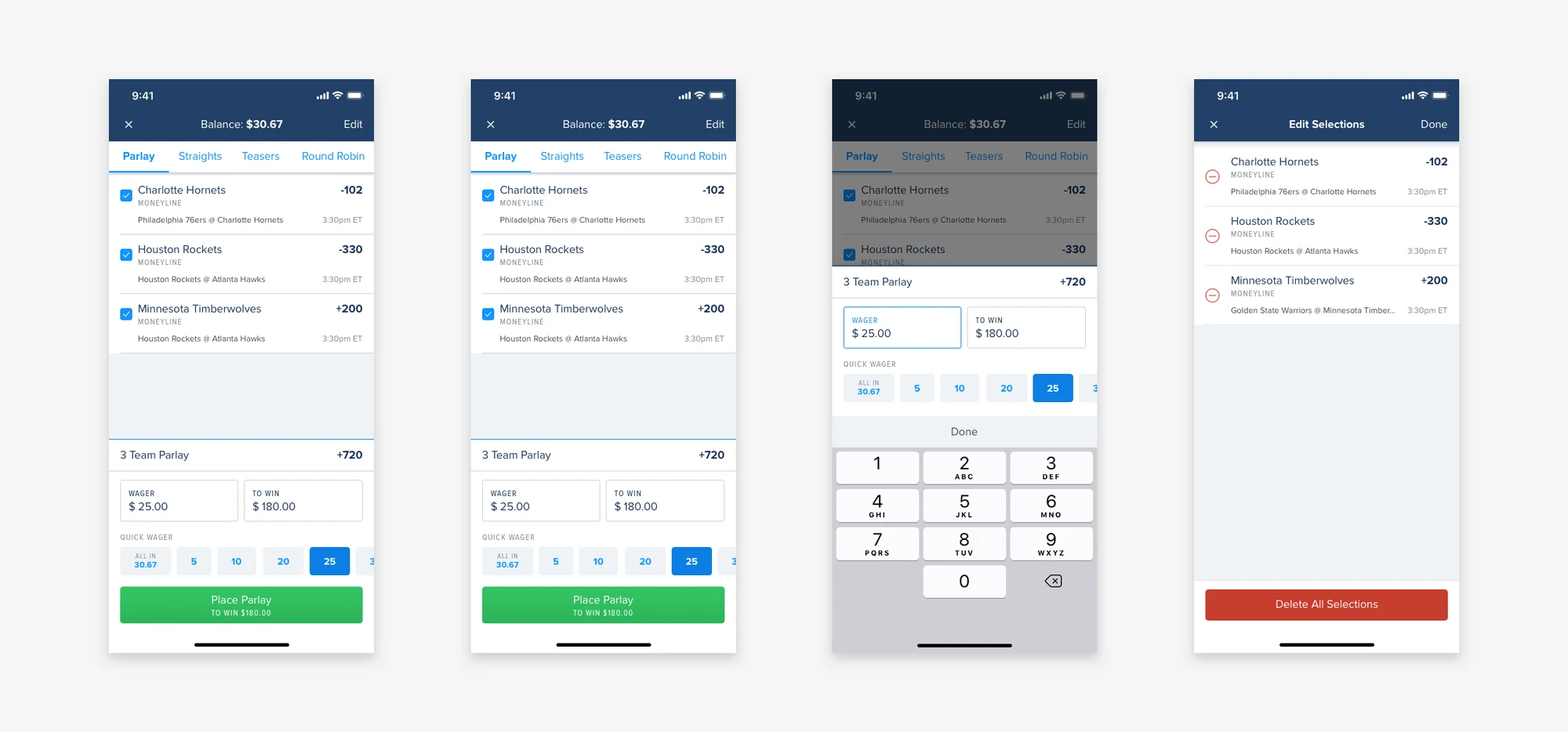
Fig. 04 · High-fidelity designs & prototypes for testing
04
Launch & outcomes
We soft-launched in West Virginia to validate platform stability, then expanded state by state on NxtGen. FanDuel scaled into the leading regulated sportsbook in the United States, product quality improving as it grew in one of the most competitive consumer categories in the country.
4 → 20+
US states live on NxtGen
12m+
Registered users
~3.5m
Monthly active users
4.6 → 4.9
Mobile App Store rating
41-43%
US market share, held consistently
$4.0bn
Sportsbook revenue, 2024
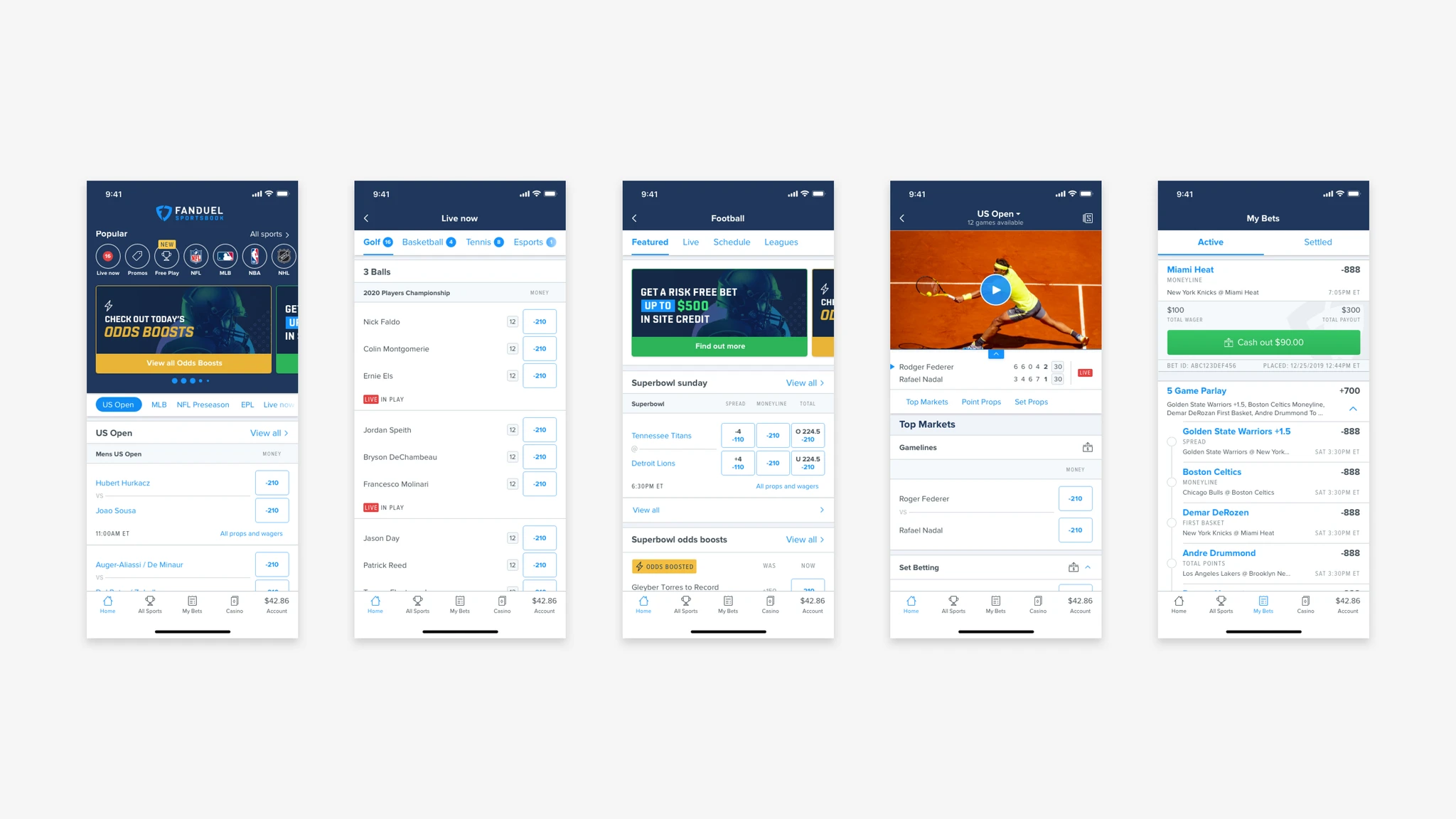
Fig. 05 · NxtGen final designs
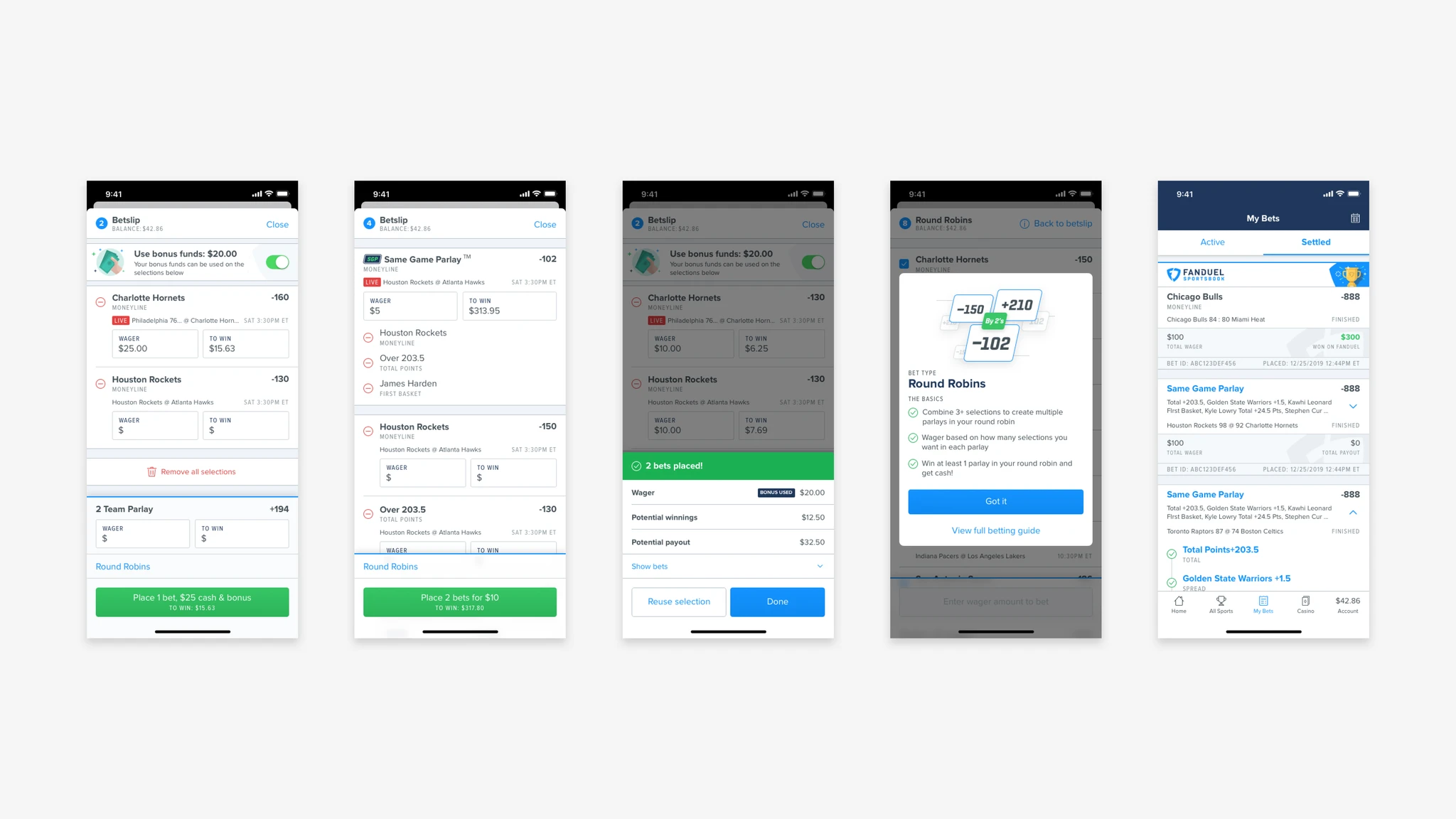
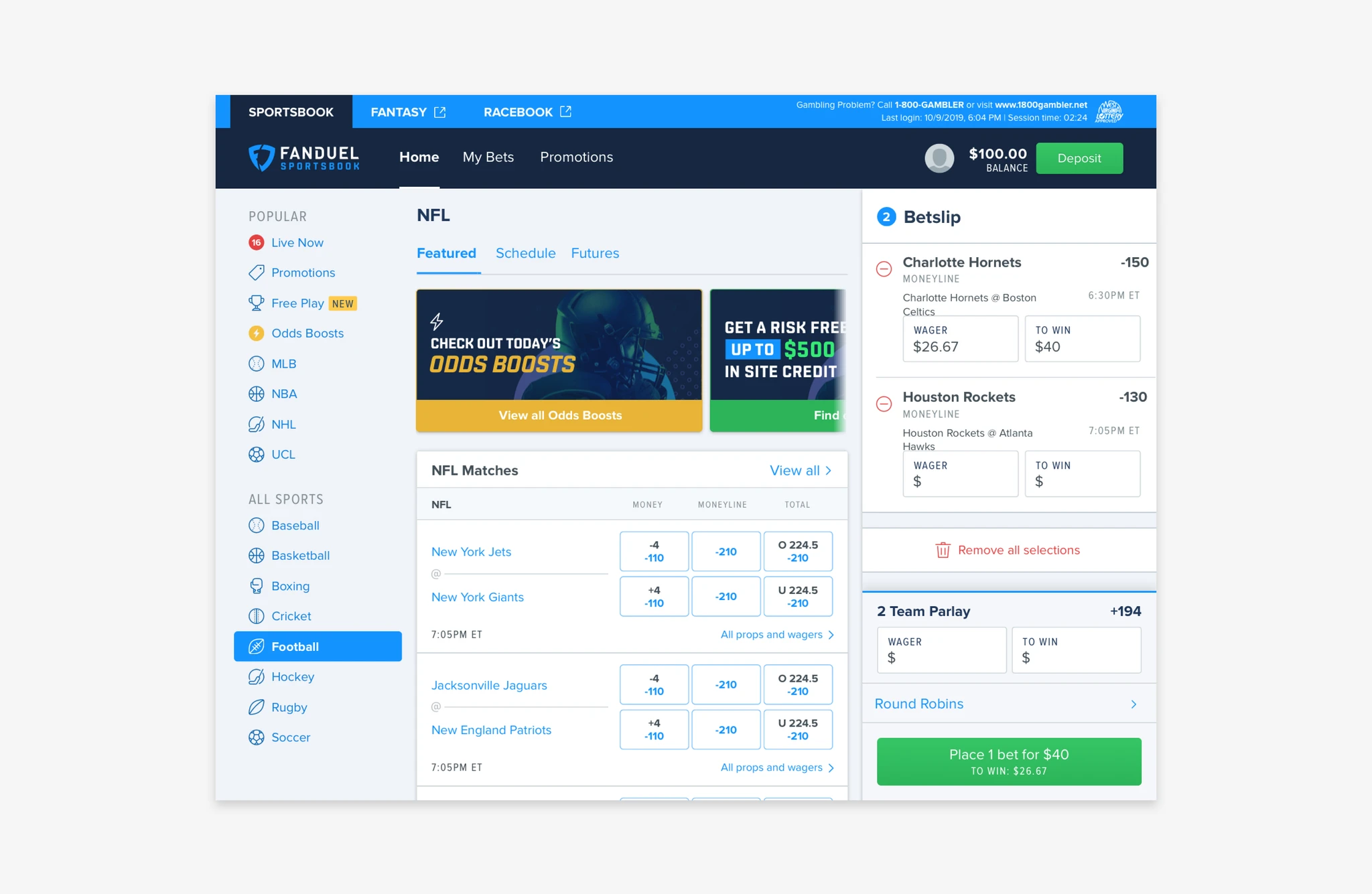
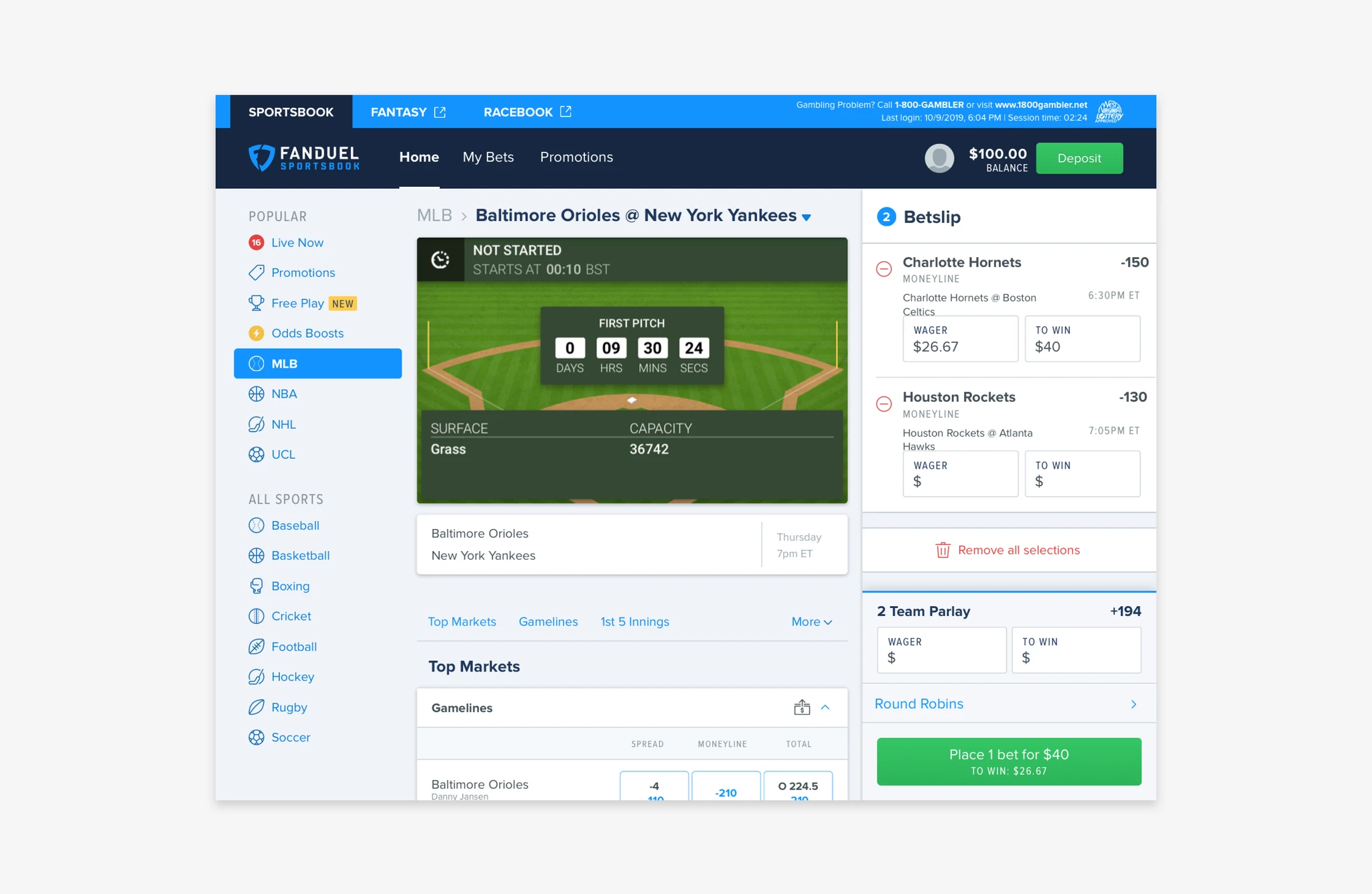
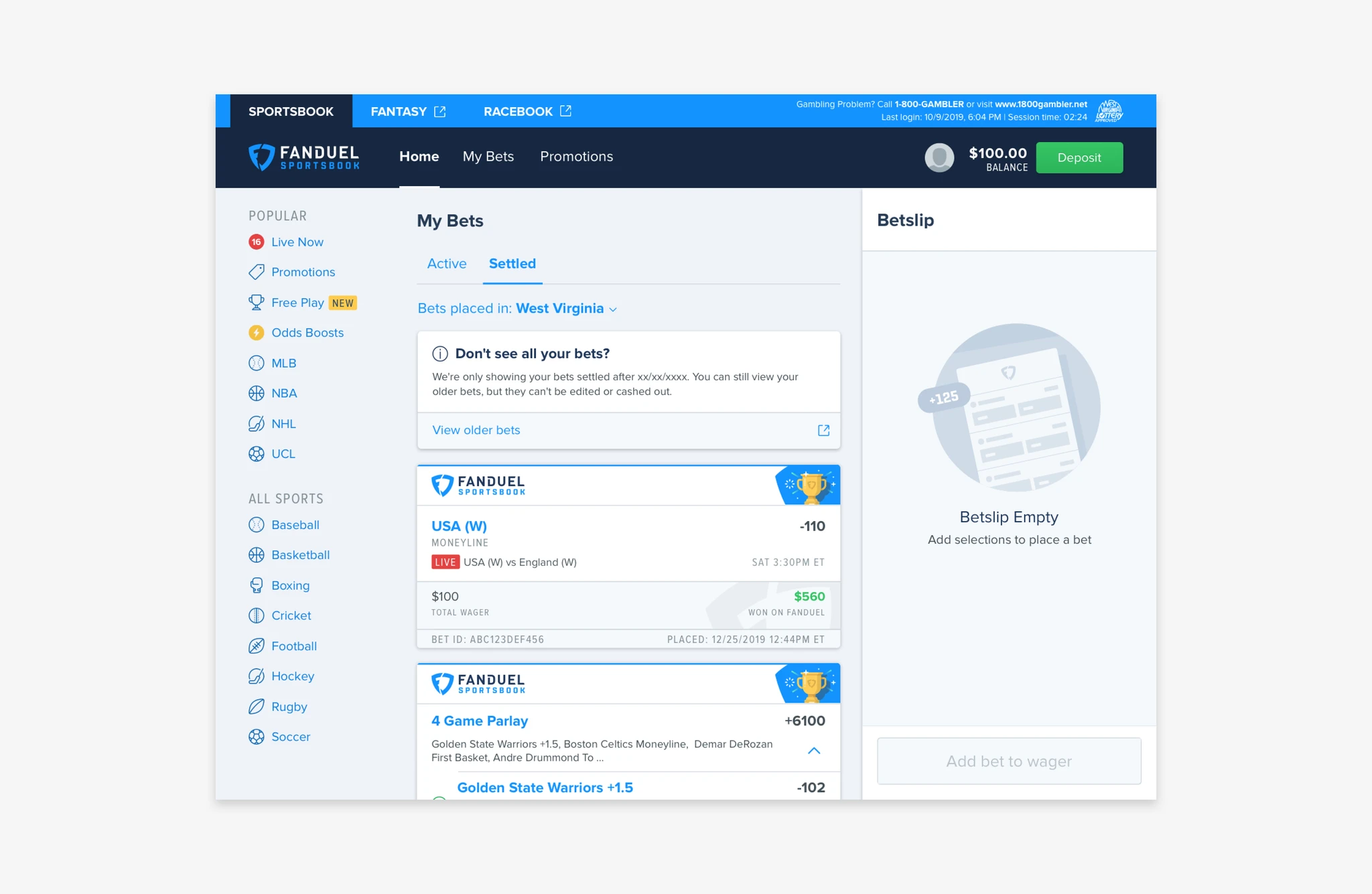
Fig. 06–09 · NxtGen across home, gamelines, markets & betslip
Up next
One Platform for Global Markets
Fastmarkets, six brands unified, +30% subscriptions